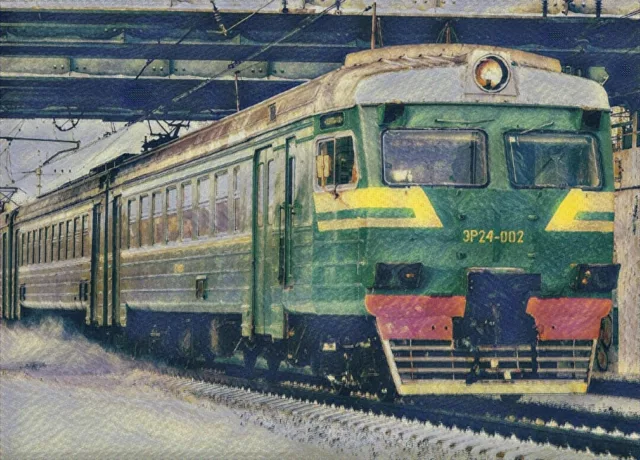
In the 1960s there were two electric trains - ER22V with new electrical equipment and durable TUR trolleys-01, and ER2 with train length 19 meters (against 25 meters at ER22). Electric train ER2R included carriages that were more compact in length, advanced electrical equipment and new trolleys.
This series introduced regenerative rheostatic braking, allowing at speeds 130-47 km/h generate electricity back to the contact network. At speed 47 to 15 km/h braking switched to rheostat, when excess energy is absorbed by braking resistors. At 15 km/h or less – electro-pneumatic, i.e. pads.
The electric train turned out to be heavy and unreliable. Modernization of electrical equipment has led to the formation of a new series ER2T with through numbering.
Factory designation:
The whole series - 62-259
Motor – 62-260
Head – 62-261
Trailed – 62-262
Peculiarities:
The electric train is equipped with regenerative rheostatic braking, allowing you to save wear on the pads and transfer the generated electricity to the contact network
Changes in electrical equipment have increased the total weight of the electric train relative to ER2, therefore, more durable TUR trolleys were used-01
Due to high axle loads and unsatisfactory performance of electric braking, the production of these electric trains was discontinued


 Open our Telegram chat