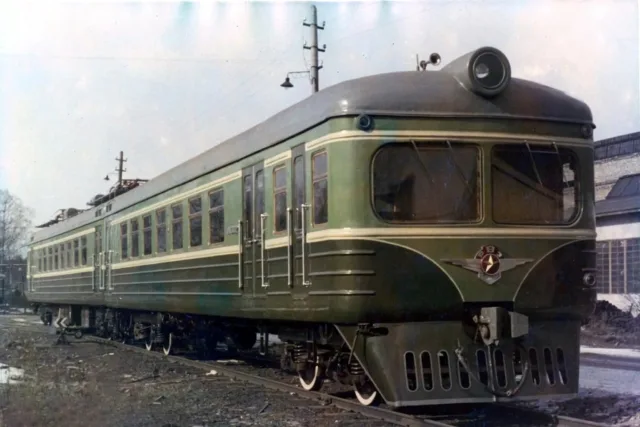
Electric train ER25
Issued in 1969-1979 years. Built 79 compositions.


ER2 – Yeelectric train RIzhsky, type - 2. Issued in 1962-1984 years on Riga Carriage Works. Built 850 compositions.
The electric train was designed in the late 1950s based on its predecessor ЕR1. The design uses new traction electrical equipment, exits were made to high and low platforms. Unified with AC electric train ER9. To be able to form ten-car electric trains into trains with a smaller number of cars, the Kalininsky Plant in 1964-1970 years, produced separate head cars.
In 1974 year the shape of the cabin was changed from round to rectangular. In addition to the shape of the cabin, ventilation has been added and the control panel has been changed., added a separate communication system "passenger driver". In the early 1980s, wooden window frames were replaced with metal ones, instead of wooden seats made of narrow slats, semi-soft seats made of artificial leather appeared. And to automatically maintain voltage in the on-board network, electronics were used for the first time.
Estonia 2 became the basis for the development of Soviet electric trains in the future. Used on Soviet railways and in the CIS for more than 40 years. Instead of ER2, the plant switched to the production of electric trains of the series ER2R, and later ER2T, equipped with regenerative-rheostatic electric braking, which were no longer compatible with ER2 and could not work together in one train.


G – head, M – motor, P – trailed
 Abkhazia: Abkhaz railway
 Azerbaijan: Azerbaijani railways
 Armenia: South Caucasus railway
 Georgia: Georgian railway
 Latvia: railway of Latvia
 Russia: West Siberian railway, Kaliningrad railway, Kuibyshevskaya railway, Moscow railway, Norilsk railway, Oktyabrskaya railway, Privolzhskaya railway, Sverdlovsk railway, Northern railway, North Caucasus railway, South-Eastern railway, Yuzhno-Uralskaya railway
 Uzbekistan: Uzbek railway
 Ukraine: Donetsk railway, Lviv railway, Pridneprovskaya railway, Southern railway
 Estonia: Estonian railways

 Open our Telegram chat
Or find a group @railtrain_chat